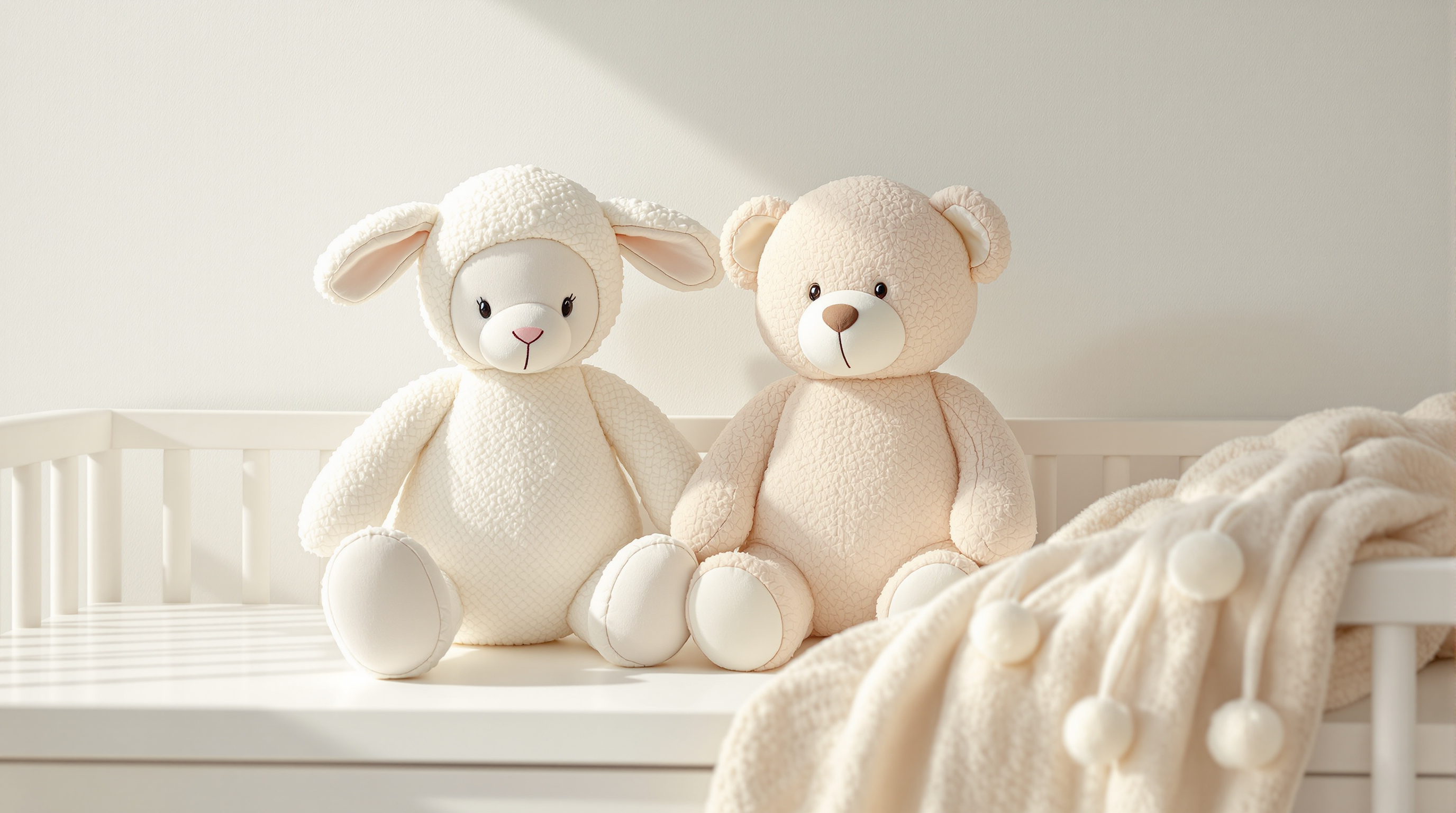
Baby-Safe Stuffed Animals & Toys
"Baby safe" was never marketing language in our shop — it was a checklist, and items that failed it didn't make the page. A stuffed animal destined for an infant is held to entirely different standards than one bought for a six-year-old, because babies test toys the only way they know how: with their mouths, with full-body force, and without supervision at 3 a.m. This guide explains exactly what to look for, whether you're buying new or vetting hand-me-downs.
The Non-Negotiables
- Embroidered features only. Eyes and noses must be stitched thread, not attached plastic. Even "locked" safety eyes can be worked loose by months of determined gumming; embroidery cannot. This is the single fastest way to sort baby-safe plush from the rest of the shelf.
- No small attached parts. No buttons, bells, ribbons, pom-poms or glued trim. If any element could fit through a toilet-paper tube, it's a choking hazard for a child under three.
- Sewn-in everything. Musical mechanisms must be fully enclosed in the body with no external hard key for crib use — fabric-tab winders or pull-cords with breakaway stitching are the infant-grade solution. Our musical plush guide covers these mechanisms in depth.
- Short, secure pile. Long silky fur sheds into small mouths. Baby plush uses short velour-style pile, double-stitched seams, and reinforced limb joints that survive a tug-of-war with a teething nine-month-old.
- Washability. Infant plush will be laundered weekly. Machine-washable construction isn't a convenience feature at this age — it's hygiene.
The Standards Behind the Label
In the United States, toys intended for children are required to meet ASTM F963, the federal toy safety standard, which mandates testing for small parts, sharp points, flammability, heavy metals and seam strength. Age grading on the label ("0+", "3 and up") reflects that testing and is a legal designation, not a suggestion. The Consumer Product Safety Commission's toy safety guides are the authoritative plain-English reference, and their recall database is worth checking before passing along any secondhand plush. When we said an animal was baby safe, it meant the maker certified it for birth and up — and the construction visibly backed the claim.
CPSC's rule made ASTM F963-23 the mandatory U.S. toy standard on April 20, 2024. The edition number helps identify which standard is being discussed. Read it alongside the intended age and the toy's instructions. CPSC's certificates rule also introduced electronic filing with U.S. Customs and Border Protection for covered imports requiring certification, effective July 8, 2026. Covered goods entered from a foreign trade zone have a January 8, 2027 effective date. These are requirements for the businesses responsible for certification. For a closer look at the rules behind a label, see our guide to reading a toy safety label.
The Crib Rule
One rule outranks every buying tip on this page: nothing soft goes in a sleeping infant's crib for the first year. Pediatric safe-sleep guidance is unambiguous — soft objects and loose bedding raise suffocation risk for babies under twelve months. The baby-safe lamb you give at a shower lives on the dresser or in supervised tummy-time until the first birthday, then graduates to full crib companionship. Tell the parents this when you give the gift; it's the most useful card note you can write.
NIH's Safe to Sleep guidance says to remove everything from a baby's sleep area except a fitted sheet covering the mattress. Its list specifically includes stuffed toys and small loveys, even when lightweight or tucked in. The guidance concerns what goes in the sleep area, whatever a toy's label says.
Classic First Animals
The infant plush canon is small and perfect: the lamb, the puppy, the elephant and the teddy bear, usually in the ten-to-fourteen-inch range. Wind-up musical versions playing a single lullaby were our most-gifted baby items across two decades, and the logic holds today — soft, safe, soothing and traditional in one box. Save the giant stuffed animals for the toddler years; at this age, smaller is genuinely better, because a baby plush that travels well becomes the comfort object that survives childhood.
The Baby-Shower Buyer's Script
If you're shopping for a shower, here is the five-minute version we recited at the counter for years. Buy two identical animals if the budget allows — when the inevitable happens and the beloved lamb is left at a rest stop in year two, the understudy saves the family week. Choose mid-size, ten to fourteen inches: big enough to find in the dark, small enough for the diaper bag. Pick a classic animal in a soft neutral rather than this year's licensed character; comfort objects outlive entertainment cycles by a decade. And write the washing instructions in the card — "machine wash cold, air dry, once a week" — because the single most common question new parents asked us wasn't about safety at all. It was how to keep the bear alive.
Vetting Hand-Me-Downs
Inherited plush carries memories and unknowns in equal measure. Inspect seams under firm tension, confirm features are embroidered (replace any plastic-eyed animal's role with a newer companion), check for internal hard parts that may have broken loose, and run the animal through a hot wash and full dry. If it emerges intact, it has passed a sterner test than most new toys ever face.