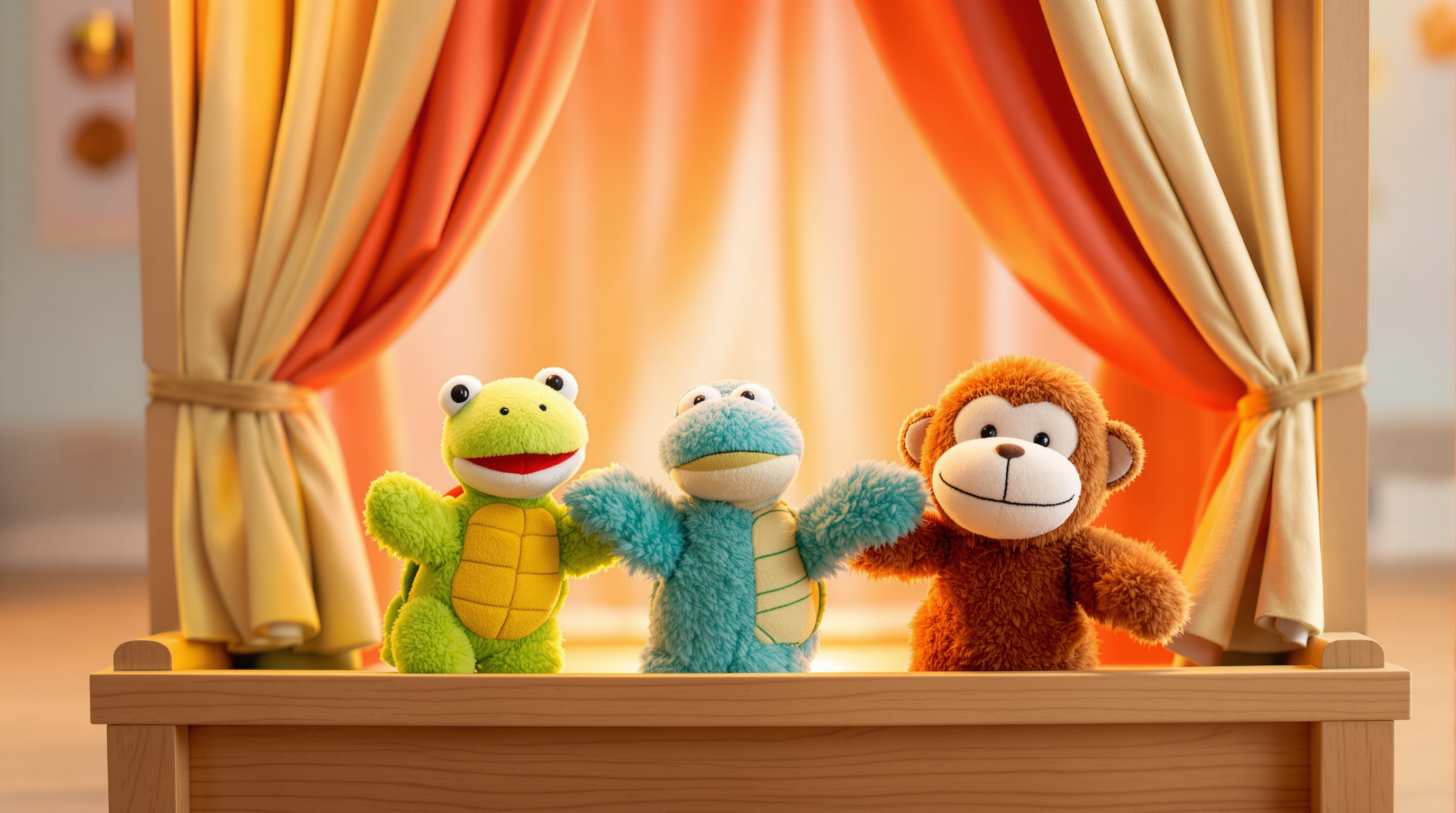
Hand Puppets & Body Puppets
Of everything we sold in twenty years of gift retail, nothing earned repeat customers like puppets. A stuffed animal is a companion; a puppet is a performance. The moment a child slides a hand inside a plush frog and makes it talk, an entire imaginative world switches on — and parents come back for the turtle, the iguana and the monkey within the month.
The Three Puppet Families
Hand Puppets (9–12 inches)
The classic. A hand puppet fits over the whole hand, with the thumb operating the lower jaw or one arm. The ten-to-twelve-inch size we carried for years is ideal for ages three and up: small enough for little arms to hold overhead behind a couch-back stage, expressive enough for real character work. Look for a structured mouth with a firm cardboard or felt palate — a puppet whose mouth folds shapelessly is frustrating to operate and gets abandoned quickly.
Body Puppets (15–32 inches)
Body puppets were our specialty and our best sellers. These are full-figure plush animals — sea turtles around 18 inches, red-eyed tree frogs around 15 inches, iguanas a dramatic 32 inches nose to tail — with an opening that lets the puppeteer animate the head and often a front limb. Draped over a child's arm, a good body puppet appears startlingly alive. They double as ordinary stuffed animals when the show is over, which is why parents loved them: one purchase, two toys.
Finger Puppets (3–5 inches)
The miniature troupe. Finger puppets shine in sets — a barnyard, an ocean, a jungle on ten fingers. They're the best travel toy ever devised (an entire cast fits in a coat pocket) and the gentlest introduction to puppet play for toddlers who find full-size puppets overwhelming.
Why Puppets Matter
Puppet play isn't just charming — it's developmental heavy lifting. Early-childhood educators at the National Association for the Education of Young Children place pretend play at the center of language growth, emotional rehearsal and social skill-building. A shy child will often tell a puppet what they won't tell an adult; a beginning reader will happily read aloud to a plush iguana long after they've refused to read to a parent. Speech therapists, kindergarten teachers and children's librarians were among our most loyal puppet customers, and they all bought for the same reason: puppets make children talk.
Choosing a Quality Puppet
- Check the seams at the mouth. The mouth takes more stress than any other part. Double-stitched seams and a reinforced palate are non-negotiable.
- Match the size to the child. A 32-inch iguana body puppet is glorious in a teacher's hands but unwieldy for a four-year-old. Start small, scale up.
- Favor realistic animals for classrooms, character-style puppets for home play. Realistic wildlife puppets pull double duty in science units.
- For children under three, apply the same rules as for any plush: embroidered eyes, no small attached parts. Our baby-safe plush guide covers the details.
Setting the Stage at Home
You don't need a theater to host a puppet show — you need a sightline to hide behind. The back of a couch is the classic proscenium; a tension rod and a curtain across a doorway is the deluxe upgrade; a large cardboard box with a window cut out is the rainy-afternoon project that children remember for decades. The only real staging rule is height: the stage edge should sit at the puppeteer's chest so arms can work above it without aching. Add a shoebox of props (a felt crown, a paper fish, a tiny blanket) and rotate the cast weekly — a puppet that disappears for a month returns as the star of the next show.
Caring for Puppets
Puppets collect more handling than any toy you own, so wash accordingly: surface-clean with a damp cloth and mild soap monthly, air-dry thoroughly, and brush the pile with a soft brush to revive matted fur. Avoid machine washing puppets with structured mouths — the palate warps. Stored puppets keep best on a peg or in a hanging shoe organizer, one pocket per character, where they stay visible and ready for the next show.
When you're ready for the rest of the menagerie, the giant stuffed animals guide picks up where the puppet stage ends.