Easter Stuffed Animals
Every spring, the Emporium turned pastel. Easter plush was our second season — smaller than Christmas but sweeter, built almost entirely around one animal: the bunny. Musical motion rabbits that played "Bunny Hop Rock" while their ears danced, seventeen-inch white rabbits with lavender bows and bendable ears, floppy chicks with their own baby chicks tucked alongside, and spring lambs soft enough to calm a teething infant. Here's everything those seasons taught us about basket-ready plush.
The Spring Lineup
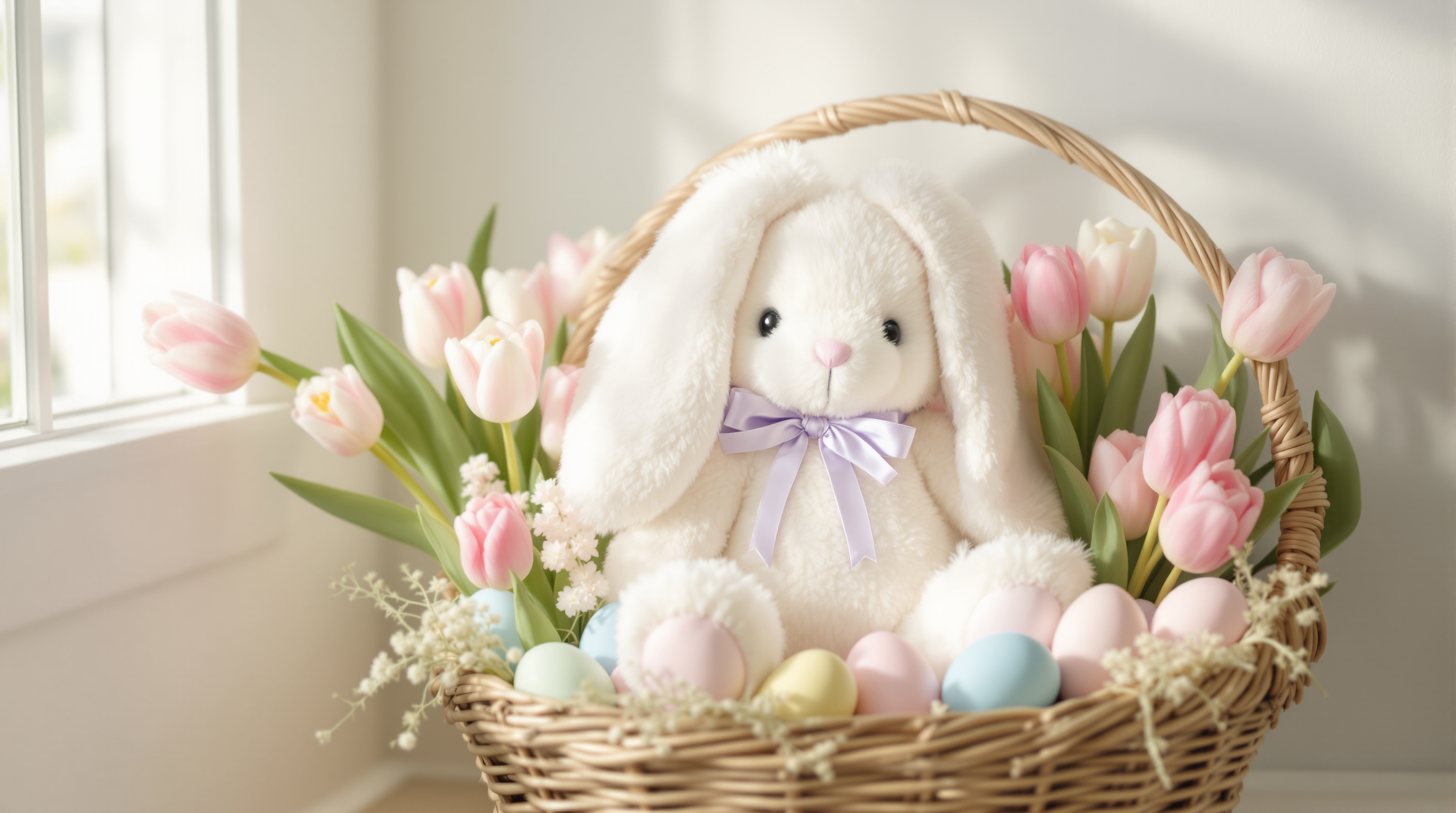
- The classic white bunny: the centerpiece. Seventeen inches is the time-honored basket-anchor size — tall enough to peer over the basket rim, soft enough to be slept with that same night. Bendable wired ears (poseable up or flopped) were the detail customers loved most; just check the wire tips are deeply padded.
- Musical motion bunnies: the entertainers. Press a paw and ears bounce while the song plays. About ten inches, pure delight for ages two to six on Easter morning.
- Chicks and ducklings: the supporting cast. A floppy mother hen with a separate baby chick was one of our most re-ordered items ever — two animals, one story, endless play.
- Spring lambs: the baby gift. A white lamb is the traditional first-Easter plush, and wind-up musical lambs do double duty as nursery sleep aids.
Why a Rabbit?
The Easter hare arrived with German immigrants in the 1700s as an egg-bringing judge of children's behavior — a furry springtime counterpart to Santa Claus. Encyclopaedia Britannica's Easter entry traces the folklore in detail. The plush version is simply that legend made huggable, which explains its staying power: an Easter bunny isn't a generic toy, it's a character a child already believes in.
Basket Strategy
A generation of Easter-morning photographs taught our customers the formula: plush anchor in the back of the basket, eggs and small gifts in front, ears above everything. Size the bunny to the basket — a ten-to-twelve-inch rabbit suits a standard basket; save the seventeen-inch classic for the floor beside it. For toddlers, skip the cellophane grass entirely (it's a known choking hazard) and nest the plush on shredded paper or a folded blanket instead. For babies' first Easter, choose embroidered-eye lambs and bunnies only — the same rules as our baby-safe plush guide.
Beyond the Basket: Spring Gifting
Easter plush earned a second season our ledgers didn't predict: spring celebrations generally. White bunnies and lambs became baby-shower staples for spring due dates; chick-and-hen pairs turned up at garden parties and grandmother birthdays; and teachers discovered that a basket of small rabbits makes the gentlest end-of-school-year classroom gift. The pastel palette is the reason — spring plush reads as celebration without being tied to a date on the calendar. If you find a beautifully made Easter rabbit marked down in May, buy it; you will need it by June, and the recipient will never know it was seasonal.
After the Baskets
Easter plush has a quieter afterlife than Christmas animals: most bunnies simply join the year-round menagerie, and white fur shows that service quickly. Spot-clean with mild soap, air-dry away from direct sun (which yellows white pile), and brush gently to restore loft. If the bunny is a keepsake, store it as we advise in the Christmas plush guide: clean, uncompressed, in breathable cotton. A well-kept white rabbit will anchor a decade of spring baskets — and look brand new in every photograph.