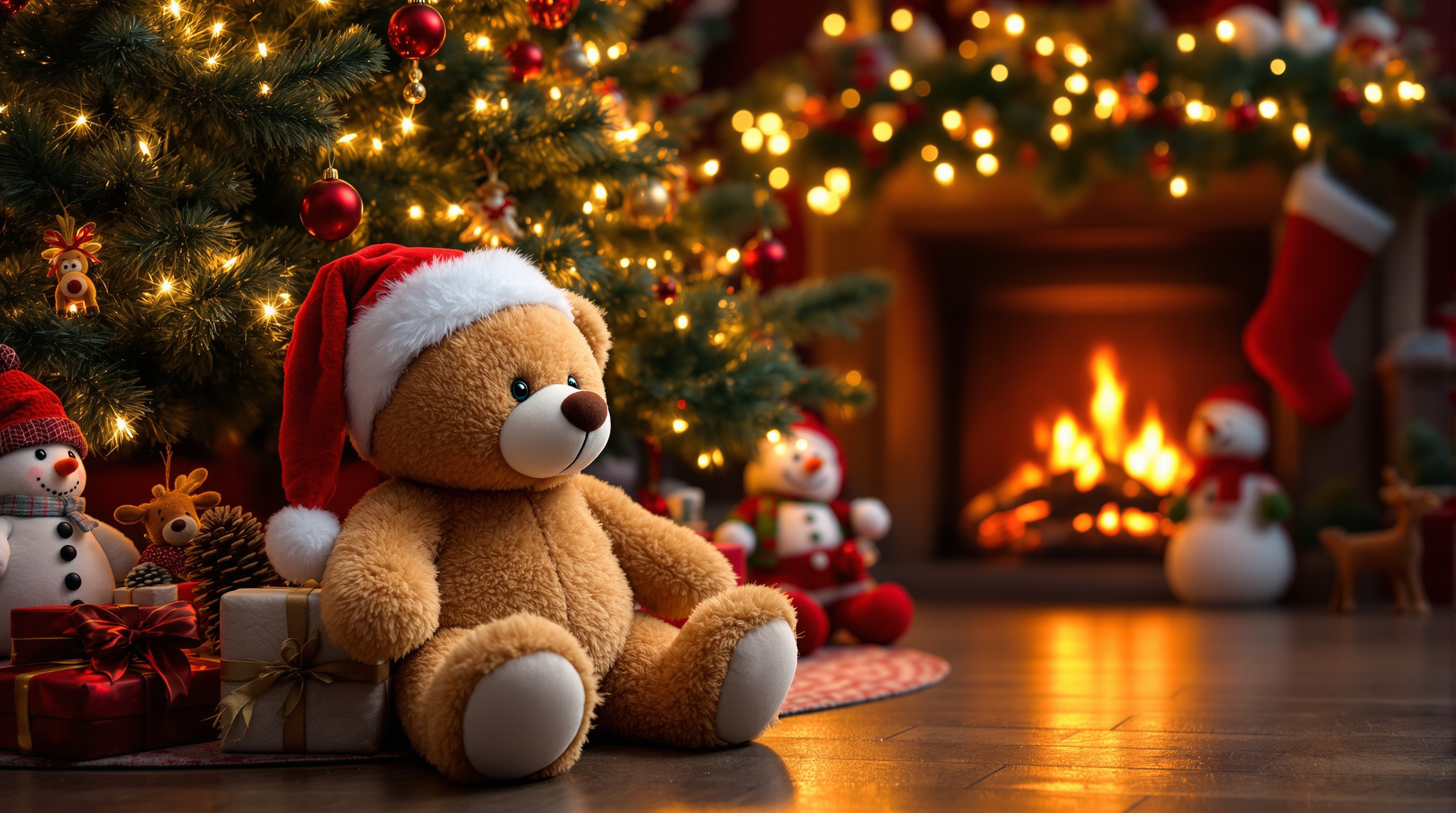
Christmas Stuffed Animals
Every November for nearly two decades, our holiday plush page lit up like the tree it served. Christmas stuffed animals were the Emporium's high season and its heart: storytime teddy bears in Santa caps reciting "'Twas the Night Before Christmas" with moving mouths, sixteen-inch plush Santas detailed down to their boot stitching, singing snowmen performing classic winter carols while their arms conducted, and drifts of reindeer, polar bears and penguins in scarves. This guide distills those seasons into advice you can use every December.
The Holiday Plush Family
- Storytelling animals: the marquee gift. A bear that recites the classic Christmas poem — head turning, mouth moving — stops a room of children cold. Sixteen inches is the classic size: big enough to perform, small enough to be hugged afterward.
- Plush Santas: the keepsake. A well-made stuffed Santa is closer to a soft sculpture than a toy, with detailed costume work — fur-trimmed cap, belted coat, tiny buckles. These come out every December for decades and get passed down.
- Singing snowmen and caroling animals: the entertainers. Press a mitten and the show begins. (Our musical plush guide covers the mechanisms and battery care.)
- Holiday dress plush: everyday animals — bears, puppies, penguins — in Santa caps and scarves. The affordable stocking tier, and the one children actually play with year-round.
Starting a Tradition
The customers we remember best bought by ritual, not by item. The most popular: one new holiday animal per child per year, name and year written on the tag, the whole menagerie emerging with the ornaments each December. After ten Christmases a child has a personal plush history — and the December unboxing becomes as anticipated as the tree itself. Gift historians note that personalized, ritualized giving is the oldest layer of the holiday; Encyclopaedia Britannica's history of Christmas traces gift traditions through centuries of exactly this kind of small, repeated ceremony.
Buying Well in the Holiday Rush
- Shop the season early. Holiday plush is produced in single annual runs; the best animated pieces sell through by early December and are simply gone.
- Check costume stitching. Sewn-on caps and scarves survive; glued trim doesn't make it to New Year's.
- Animated pieces: test the motion in the box if you can. A reciting bear whose mouth is out of sync with the poem will bother you more than the children.
- For babies' first Christmas, skip the battery animals entirely and choose a soft holiday-dress plush with embroidered features.
For animated holiday toys, CPSC's discussion of ASTM F963-23 puts battery access alongside the performance. It describes batteries remaining inaccessible without a common household tool before and after use-and-abuse testing. Screwdrivers, pliers and coins are among the tools CPSC lists. Give the battery door its own look while reading the toy's instructions; don't let a Santa costume or familiar carol take all the attention. CPSC also extends testing to toys containing small-part batteries for children over eight years, within the standard's scope. An older child's age grade is therefore no reason to overlook the compartment.
Beyond the Tree: Holiday Plush as Decor
Half our December customers weren't buying toys at all — they were decorating. A sixteen-inch plush Santa holds a mantel corner better than most ceramic figures and survives the box stairs-tumble that ends their porcelain rivals. Reindeer pairs flank a hearth; a basket of scarf-wearing bears by the door greets guests at child height; a snowman on the piano becomes the spot the cat concedes only in January. The decorating customers taught us to evaluate holiday plush on posture — a display animal must sit or stand unassisted — and on costume detail that reads from across a room. If you're buying for the mantel rather than the toy box, weight in the base and stitched-on costuming are worth paying for.
The Eleven-Month Question: Storage
Holiday plush lives in storage longer than in service, so storage is where keepsakes are won or lost. The rules: clean before packing (surface-wipe, fully dry), never compress, and use breathable cotton bags or paper-lined bins rather than sealed plastic, which traps humidity and invites mildew. Keep storage off attic floors and away from cedar oils, which can mark light fur. A plush Santa stored well opens the box each December looking exactly as the previous year closed it — and that continuity, more than anything we ever sold, is what families came back to thank us for.
CPSC names battery leakage among the hazards addressed by the toy standard. As you pack seasonal animated plush, keep its battery instructions with the animal, ready to read again when the decorations come out.
When the tree comes down, spring is closer than it looks: our Easter stuffed animals guide picks up the seasonal calendar from here.