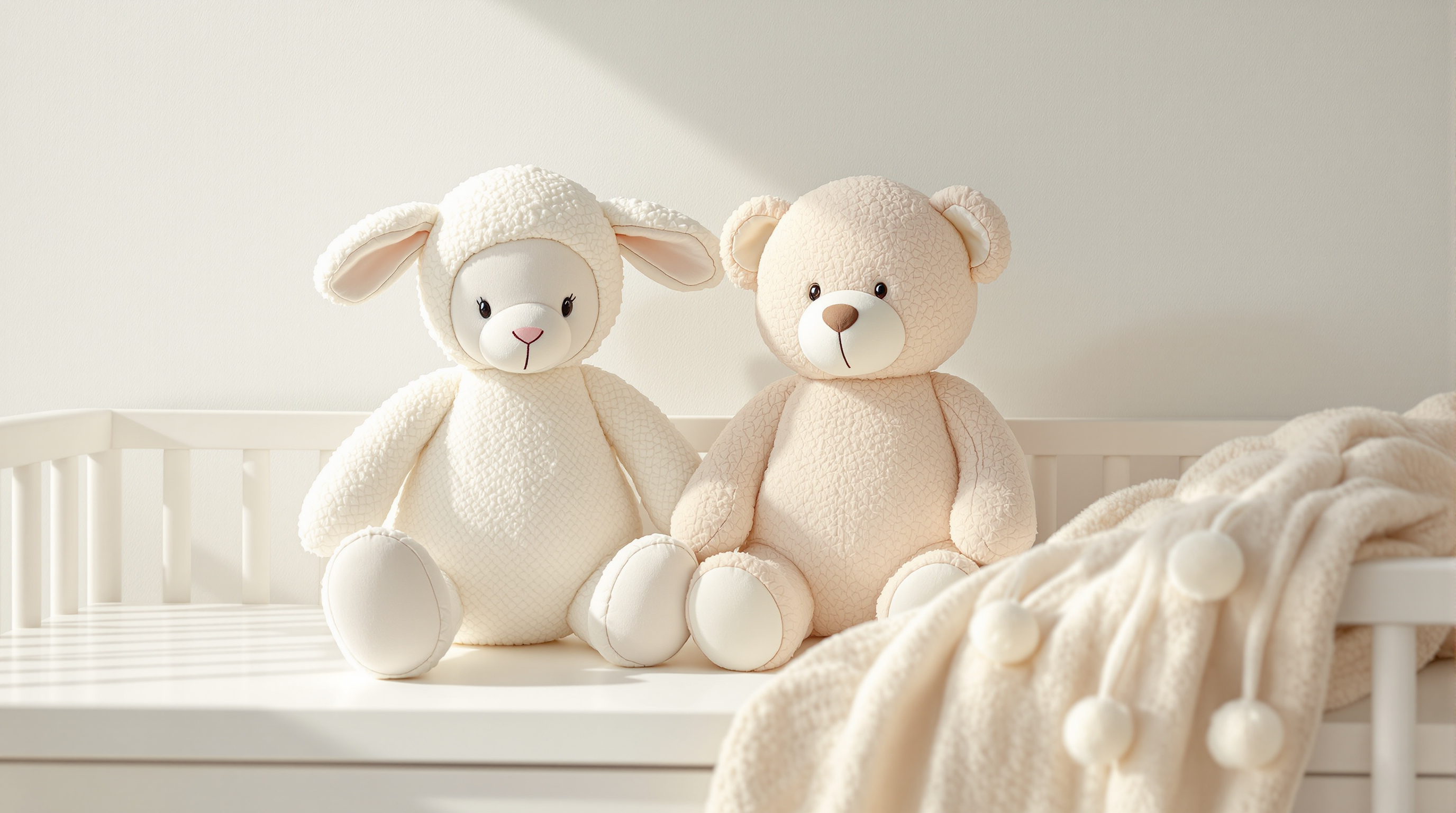
Reading a Toy Safety Label
A toy label deserves a slower look than the ribbon on the box. Start with the intended age, then read the instructions and any warnings together. For a singing bear, include the battery door in that reading; for a nursery gift, think about where the toy will be placed. The following guide connects those questions with CPSC's toy rules and NIH's infant sleep guidance. It explains these requirements without treating a label as a promise about every possible use.
- Age: read the stated range in full, including any wording about intended use.
- Operation: find the instructions before trying a singing or moving feature.
- Warnings: read them alongside the appealing description, rather than leaving them with the wrapping.
- Gift handover: keep the instructions and package information available to the adult receiving the toy.
The Standard Behind the Label
The U.S. Consumer Product Safety Commission, or CPSC, explains that the Consumer Product Safety Improvement Act made ASTM F963 a mandatory toy safety standard. CPSC's rule incorporating ASTM F963-23 made that revised edition mandatory on April 20, 2024. The letters and numbers are useful when you are trying to understand a reference on packaging or in a toy description: they identify the standard and the edition being discussed.
Read an age grade alongside the rest of the information, rather than stopping at the largest words on the package. Ask what the instructions say about batteries and sound, and keep any warnings with the toy when it becomes a gift. If a description leaves a question unanswered, write that question down. A familiar animal shape gives you something to recognize; the printed details give you something to check.
The edition number identifies a version of the standard. The intended age describes the audience named on the toy's label. Keep both details in view when comparing two gifts with similar names or appearances.
Battery Doors and the Household-Tool Test
CPSC's discussion of battery accessibility describes batteries remaining inaccessible without a tool before and after the standard's use-and-abuse testing. In ASTM F963-23, CPSC explains, the defined term is a common household tool. Its examples include straight-blade or Phillips screwdrivers, pliers and coins. The wording concerns access to the batteries, so give the compartment as much attention as the button that starts the song.
CPSC also explains that the revised testing provisions cover toys containing small-part batteries intended for children over eight years, within the standard's scope. That extends the testing beyond the ages addressed by the earlier test parameters. An age label for an older child therefore belongs in the same reading as the battery instructions. For a gift, keep those instructions available to the adult who will be dealing with the compartment. Reading them is a practical step; it doesn't reproduce the standard's testing.
How Loud Is Too Loud?
CPSC says the sound-producing-toy requirements are intended to reduce hearing-loss risk from exposure to toy sound. The agency explains that ASTM F963-23 includes a revised limit for push or pull toys, addressing a gap in the earlier edition. For a musical plush animal, look for its own operating information and sound details. Keep the toy category in view when reading about the standard; this particular revision concerns push or pull toys.
When considering a musical toy, read what its instructions say about operating it and listen to understand its character. A tune you enjoy tells you about your preference. It cannot tell you whether the toy meets the standard's sound requirements. Keep those two questions separate while comparing gifts, so that a pleasant song doesn't become the whole basis for your decision.
Certificates That Travel With Imports
CPSC's Certificates of Compliance rule, published January 8, 2025, implements electronic filing of certificates with U.S. Customs and Border Protection for covered imported products requiring certification. The rule's general effective date is July 8, 2026. For covered goods entered from a foreign trade zone for consumption or warehousing, the effective date is January 8, 2027. Those dates refer to the rule's requirements.
CPSC says the rule applies to importers, domestic manufacturers and private labelers required to issue certificates for covered products. For a gift-giver, this helps explain the certification paperwork behind a toy description. Keep the business requirement separate from your task of reading the age range, instructions and warnings. Neither a mention of paperwork nor an appealing description answers every question about how a particular toy will be used.
A Newer Rule: Water-Bead Toys
CPSC's water-bead toy rule took effect March 12, 2026, and covers water-bead toys and toys containing water beads. CPSC describes beads that absorb liquid and expand. Its examples include a bead growing from 2.0 millimetres to 16.0 millimetres in diameter, and another growing from 7.0 millimetres to 50.0 millimetres. These are examples of expansion, rather than measurements to assume for every bead.
CPSC requires the warning label on the principal display panel of the toy packaging. If the beads are packaged in a separate container, that container must carry the warning on its principal display panel too. In plain language, the rule calls for the warning on the main display face of the packaging. Read that warning with the instructions before considering such an item as a gift. This is a separate rule for the toys it names.
Labels Don't Change the Crib Rule
NIH's Safe to Sleep guidance says to remove everything from a baby's sleep area except a fitted sheet covering the mattress. NIH names stuffed toys, pillows and crib bumpers among soft items to remove. It also includes small or lightweight loveys even when tucked in, and weighted items. A toy label doesn't change that instruction.
For a nursery gift, read the label and plan the placement as two separate tasks. NIH's sleep-area guidance remains the reference when deciding what belongs around a sleeping baby. Carry that guidance into the gift conversation along with the toy's instructions.